
Construction I II III
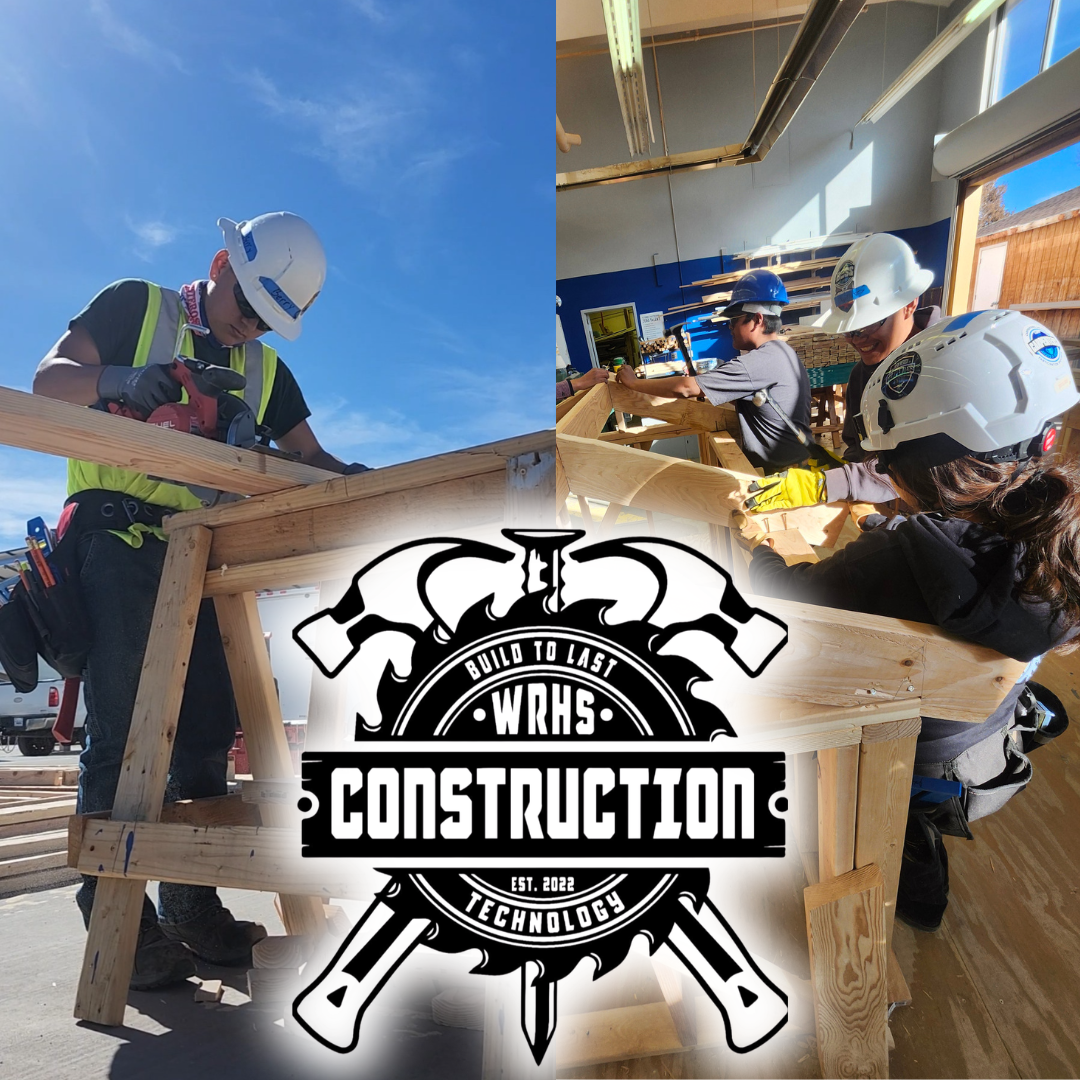
Window Rock High School Construction Technology
Course Syllabus
Course Header
· Grade Levels: 10–12
· Duration: Full Year
· School: WRHS
· Room/Shop: D-02
· Email: [email protected]
· Phone: 928-729-7041
· Office Hours/Availability: 8am to 4pm/ Email
---
Course Description
Construction Technology is a hands-on Career and Technical Education course designed to introduce students to the knowledge, skills, tools, materials, and practices used in the construction industry. Students will learn about construction safety, OSHA standards, hand and power tools, construction math, measurement, blueprint reading, building materials, framing, foundations, concrete, masonry, and basic electrical and plumbing systems.
Through classroom instruction, demonstrations, laboratory activities, and project-based learning, students will apply construction concepts to authentic workplace tasks. Emphasis will be placed on safe work habits, precision, problem-solving, teamwork, communication, craftsmanship, and responsible use of tools and equipment.
The course supports career exploration in carpentry, general construction, electrical, plumbing, masonry, HVAC, drafting, construction management, and related trades. Students will work toward the OSHA 10-Hour Construction Safety Certification and NCCER Core Curriculum Certification, when available through the school or approved training provider.
---
Course Objectives
By the end of the course, students will be able to:
1. Demonstrate safe work practices, proper use of personal protective equipment, and compliance with classroom, shop, and OSHA-related procedures.
2. Maintain a clean, organized, and hazard-free work area while properly storing tools, materials, and equipment.
3. Identify, select, inspect, and safely use common hand tools, power tools, and construction equipment.
4. Apply construction math skills to measurement, estimation, scale, area, volume, material quantities, and project layout.
5. Read and interpret construction documents, including blueprints, diagrams, drawings, specifications, schedules, and cut lists.
6. Identify major types and components of construction drawings and explain their purposes.
7. Use layout, marking, and measurement tools accurately to transfer dimensions from plans to physical work areas.
8. Identify common building materials, fasteners, structural components, and basic building systems.
9. Explain the basic functions and construction applications of foundation, framing, electrical, plumbing, and other building systems.
10. Demonstrate employability skills, including communication, teamwork, problem-solving, professionalism, career planning, and preparation for industry credentials.
---
Arizona CTE Standards Alignment
This course aligns with the Arizona Career and Technical Education Construction Technology and related construction/carpentry technical standards. Instruction and assessment will address the following standards:
· CT1.6: Follow good housekeeping procedures for the worksite, including keeping the work area clean, storing materials properly, eliminating hazards, performing safety checks, and reporting injuries, incidents, and near misses.
· CT2: Apply construction math skills.
· CT3: Use construction documents and technology tools.
· CT3.1: Describe guidelines and details provided by construction documents, including blueprints, diagrams, drawings, specification sheets, site layout plans, cutting lists, and schedules.
· CT3.2: Identify six types of construction drawings and explain their use, including civil plans, architectural plans, structural plans, mechanical plans, plumbing/piping plans, and electrical plans.
· CT3.3: Explain the basic components of a construction drawing, including the title block, border, drawing area, revision block, legend, and north arrow.
· CT4.2: Identify and explain the use of layout, marking, and measurement tools, including metal rules, carpenter’s squares, engineer’s squares, marking gauges, sliding T-bevels, and marking knives.
· CT13.6: Identify electrical materials used in construction projects, including electrical boxes, wiring systems, circuit breakers, power strips, and digital multimeters.
· CP1.2: Describe methods to establish work-zone safety according to the Construction Standard, U.S. Code of Federal Regulations 1926, including danger signs, caution signs, information signs, safety instruction signs, barricades, and barriers.
· CP1.3: Use hand tools, power tools, and equipment according to job specifications and safety guidelines.
· CP4.1: Describe guidelines and details provided by carpentry construction documents, including construction plans or blueprints, diagrams, drawings, specification sheets, site layout plans, cut lists, and schedules.
· CP4.2: Identify and explain types of construction blueprints, including architectural, mechanical, electrical, structural, and plumbing blueprints.
· CP4.3: Interpret blueprint structures and sections, including lines, terms, symbols, scales, and drawing dimensions.
· CP5: Operate hand tools, power tools, and equipment.
Standards will be reinforced through safety assessments, blueprint-reading activities, construction math assignments, laboratory demonstrations, performance tasks, projects, and employability activities.
---
Industry Certifications
OSHA 10-Hour Construction Safety Certification
Students will work toward the OSHA 10-Hour Construction Safety Certification through approved instruction and assessment procedures. The course content may include hazard recognition, personal protective equipment, fall protection, ladders and scaffolds,
electrical safety, material handling, tools, housekeeping, emergency procedures, and workers’ rights and responsibilities.
This credential demonstrates foundational safety awareness and may strengthen students’ applications for entry-level construction employment, work-based learning, internships, and apprenticeships.
NCCER Core Curriculum Certification
Students will work toward the NCCER Core Curriculum Certification, when available through an approved NCCER program or training provider. Core topics may include basic safety, construction math, hand and power tools, blueprint reading, communication skills, employability skills, material handling, and introduction to construction careers.
NCCER credentials provide portable documentation of foundational construction knowledge and may support future coursework, apprenticeships, technical training, and employment in the construction industry.
Certification requirements, testing procedures, costs, and credential availability are subject to school, program, and approved provider policies.
---
Course Units and Topics
First Semester
Unit 1: Construction Safety and OSHA Standards
Estimated Length: 4–5 weeks
· Personal protective equipment, hazard recognition, emergency procedures, and work-zone safety.
· OSHA-related construction safety topics, including falls, electrical hazards, ladders, scaffolds, fire prevention, and material handling.
· Housekeeping procedures, incident reporting, safety inspections, and preparation for OSHA certification.
Unit 2: Hand Tools and Power Tools
Estimated Length: 4–5 weeks
· Identification, purpose, inspection, maintenance, and storage of common construction tools.
· Safe operating procedures for saws, drills, sanders, fastening tools, and other approved equipment.
· Tool-selection activities and practical demonstrations based on job specifications.
Unit 3: Construction Math and Measurement
Estimated Length: 3–4 weeks
· Whole-number, fraction, decimal, ratio, proportion, estimation, and conversion skills used in construction.
· Accurate use of tape measures, rules, levels, squares, chalk lines, and other measurement tools.
· Area, volume, scale, material estimates, and layout calculations for construction projects.
Unit 4: Blueprint Reading and Construction Documents
Estimated Length: 4–5 weeks
· Types of construction drawings, including architectural, structural, civil, mechanical, plumbing, and electrical plans.
· Title blocks, legends, symbols, abbreviations, dimensions, scales, revision blocks, and north arrows.
· Using plans, specifications, schedules, cut lists, and site layouts to plan and complete work.
---
Second Semester
Unit 5: Building Materials and Fasteners
Estimated Length: 3–4 weeks
· Characteristics, uses, selection, storage, and handling of wood, metal, concrete, masonry, plastics, and composite materials.
· Nails, screws, bolts, anchors, adhesives, brackets, and other common fasteners.
· Matching materials and fasteners to project requirements, environmental conditions, and structural needs.
Unit 6: Building Systems and Framing
Estimated Length: 5–6 weeks
· Basic components of residential and commercial construction, including foundations, floors, walls, ceilings, and roofs.
· Wall, floor, and roof framing concepts; layout of studs, openings, plates, joists, rafters, and structural members.
· Applying blueprint information to physical layouts and constructing project components safely and accurately.
Unit 7: Concrete, Masonry, and Foundations
Estimated Length: 3–4 weeks
· Foundation types, site preparation, forms, reinforcement, concrete ingredients, placement, finishing, and curing.
· Basic masonry materials, mortar, courses, joints, alignment, and safe construction practices.
· Identifying common foundation and masonry problems and discussing methods of prevention.
Unit 8: Introduction to Electrical and Plumbing Systems
Estimated Length: 3–4 weeks
· Basic electrical materials, including boxes, wiring systems, circuit breakers, receptacles, and measuring devices.
· Introductory plumbing components, pipe types, fittings, valves, drainage, and water-supply concepts.
· Reading basic system diagrams and recognizing when specialized or licensed work is required.
Unit 9: Career Exploration and Job Readiness
Estimated Length: 2–3 weeks
· Construction career pathways, apprenticeships, technical schools, military opportunities, and postsecondary programs.
· Résumés, applications, interviews, workplace communication, teamwork, punctuality, and professionalism.
· Career portfolios, credential documentation, workplace expectations, and personal career plans.
Unit sequence and pacing may be adjusted to accommodate school calendars, student needs, weather, equipment availability, projects, and certification schedules.
---
Required Materials and Supplies
Students should bring the following materials unless otherwise directed:
· Work gloves appropriate for the task
· Closed-toe, sturdy work shoes; steel-toed boots are strongly recommended or required for designated activities
· Durable work clothing that fits safely and covers the body appropriately
· Pencils, eraser, and black or blue pencils
· Assigned textbook, digital resources, or training materials
· Water bottle, if permitted by school and shop policy
Students should label personal belongings. The school or instructor will provide or identify specialized tools, equipment, materials, and certification resources.
---
Grading Policy
Category Weight
Projects and Lab Work 40%
Tests and Quizzes 30%
Safety and Lab Participation 20%
Homework and Classwork 10%
Total 100%
Grading Scale
Grade Percentage
A 90–100%
B 80–89%
C 70–79%
D 60–69%
F Below 60%
Projects and laboratory work may be evaluated using criteria such as safety, planning, accuracy, craftsmanship, tool use, productivity, teamwork, problem-solving, cleanup, and completion of required documentation.
---
Safety Expectations
Safety is the number one priority in Construction Technology. Students may participate in shop activities only when they demonstrate safe behavior and follow all instructor directions.
1. PPE is required. Students must wear safety glasses as directed, closed-toe shoes, appropriate clothing, and any additional protective equipment required for a task.
2. Students must pass required safety tests and demonstrate proper procedures before using tools, machinery, equipment, or materials.
3. Students must inspect tools and equipment before use and immediately report damaged, missing, or malfunctioning equipment.
4. Students must follow posted procedures, manufacturer instructions, instructor demonstrations, and applicable school safety policies.
5. Horseplay, fighting, running, throwing objects, distracting others, and unsafe tool use are prohibited.
6. Students must keep work areas clean, remove waste promptly, store materials correctly, and maintain clear walkways.
7. Students must report injuries, hazards, property damage, near misses, and unsafe conditions immediately.
8. Safety violations may result in a warning, loss of shop privileges, reassignment to a safety activity, parent/guardian contact, removal from the laboratory, or referral according to school policy.
9. Serious or repeated violations may result in immediate removal from the shop and additional disciplinary consequences under school and district policies.
---
Classroom and Shop Expectations
Students are expected to:
1. Arrive on time, prepared, and ready to learn.
2. Follow directions the first time they are given.
3. Use tools, equipment, materials, and technology only as instructed.
4. Wear required PPE and appropriate clothing for every laboratory activity.
5. Treat classmates, instructors, visitors, and school property with respect.
6. Work cooperatively and communicate clearly with team members.
7. Demonstrate craftsmanship, accuracy, persistence, and pride in completed work.
8. Remain in assigned areas unless permission is granted to move.
9. Keep the classroom and shop clean, organized, and ready for the next class.
10. Use time productively and complete required planning, work, cleanup, and reflection tasks.
11. Ask questions when instructions, measurements, plans, or safety procedures are unclear.
12. Take responsibility for personal conduct, assigned tools, materials, and completed work.
---
Attendance Policy
Regular attendance is essential because this course includes demonstrations, collaborative activities, hands-on laboratory work, and projects that may not be easily replicated outside the classroom.
· Students are expected to attend every class and arrive on time.
· Tardiness may result in missed instructions, delayed participation, or additional make-up requirements.
· Students should follow school attendance procedures and communicate with the instructor after an absence.
· Students are responsible for obtaining missed notes, assignments, safety information, and project instructions.
· Students may not participate in a laboratory activity until they have received all required safety instruction.
---
Late Work and Make-Up Policy
· Assignments should be submitted by the posted due date.
· Late academic work may be accepted according to school and instructor policy and may receive a designated late-work consequence.
· Missed tests and quizzes must be completed within the time allowed by school policy.
· Missed laboratory activities and projects must be scheduled with the instructor and completed only when appropriate tools, materials, supervision, and safety conditions are available.
· Students may be required to complete an alternate assignment when a missed lab cannot be safely or reasonably recreated.
· Students are responsible for communicating promptly about absences and making arrangements for missed work.
---
Academic Honesty
Students are expected to submit their own work and accurately represent their learning. Cheating, plagiarism, copying another student’s work, submitting work completed by someone else, falsifying measurements or project records, and unauthorized use of digital tools are prohibited. Academic-honesty concerns will be addressed according to school and district policies.
Collaboration is encouraged when assigned; however, each student must complete and understand their own required work.
---
Additional Policies
Cell Phones and Electronic Devices
Cell phones and personal electronic devices must be silenced, stored, and used only according to school and instructor expectations. Devices may be used for approved instructional purposes only. Devices are not permitted during tool demonstrations or laboratory activities unless specifically authorized.
Food and Drinks
Food, gum, and beverages are not permitted in the shop or near tools, equipment, construction materials, or work surfaces. Water may be permitted in a closed container in an instructor-approved location.
Respect and Professionalism
Students are expected to communicate respectfully, use appropriate language, respect diverse backgrounds and perspectives, and demonstrate workplace professionalism. Harassment, bullying, discrimination, intimidation, threats, and retaliation are not acceptable and will be addressed under school and district policies.
---